What is LPG?
A mixture of liquefied petroleum gas (LPG) and a diluent, usually compressed air, synthetic natural gas (SNG) is used as a direct substitute for natural gas due to its almost identical composition. SNG can be derived from coal or biomass or can be synthesized using renewable energy, acting as a low-carbon alternative to fossil fuels. The convenient composition of LPG allows it to be mixed with natural gas in all cases, as it is easily mobile.
Synthetic natural gas (SNG) is one of the products that can be produced from coal during the methanation process of syngas. The economic viability of LPG production from coal gasification is highly dependent on the market prices of natural gas and coal feedstocks used, the value of by-products such as carbon dioxide (CO2), and additionally the capital costs of the gasification plant.
Synthetic natural gas typically refers to streams from "coal gasification" plants or from refineries and petrochemical processes. LPG can also be used to refer to a mixture of propane or other LPG and air. Replacement natural gas and supplemental natural gas almost always refer to mixtures of "LPG and air," with "propane-air" being the most common form.
The technology is old and tried and mostly used in the US. At this time, when the price of natural gas has risen drastically and can continue to grow unstoppably from the economic side, such technologies have become interesting, because it is possible to replace natural gas with an alternative gas fuel (i.e. LPG) without completely changing the existing natural gas supply system and gas burners, there is no need to even readjust them.
Also, using a mixture of liquid petroleum gas and air, it is possible to replace natural gas in any ratio from 0 to 100%, i.e. burn gas that is cheaper in use.
Advantages of LPG gas
Cost savings
Greater reliability of gas supply
Flexibility and market access
Economy
Less risk
Easy logistics
Differences between LPG and natural gas
LPG (liquefied natural gas):
- Liquefies at relatively high temperature and low pressure, making it easy to store and transport.
- Can be stored separately in cylinders and tanks, so can be used anywhere.
- Quick recovery in case of an accident.
NG (natural gas):
- Liquefied at very low temperature and high pressure, it is not easy to store and transport separately, so NG is supplied by pipelines to each user.
- Due to the high cost of pipeline construction, it is difficult to supply NG to depleted areas with low population (therefore LPG is used in areas where NG does not reach).
- Tanks are not individual storage capacity, it is almost impossible to provide individual spare parts if there is supply instability due to lack of NG, pipeline problems etc.
Since NG liquefaction is not easy, the gaseous states of NG are supplied from LPG receiving terminals by pipelines.
On the other hand, liquefied gases are supplied separately in a liquid state using easy condensation properties.
Since LPG is operated with individual storage and vaporization facilities, the risk of supply problems is extremely low and can be restored relatively quickly even if the infrastructure is destroyed in an earthquake or other natural disaster. In this respect, LPG is widely recognized as the best alternative fuel.
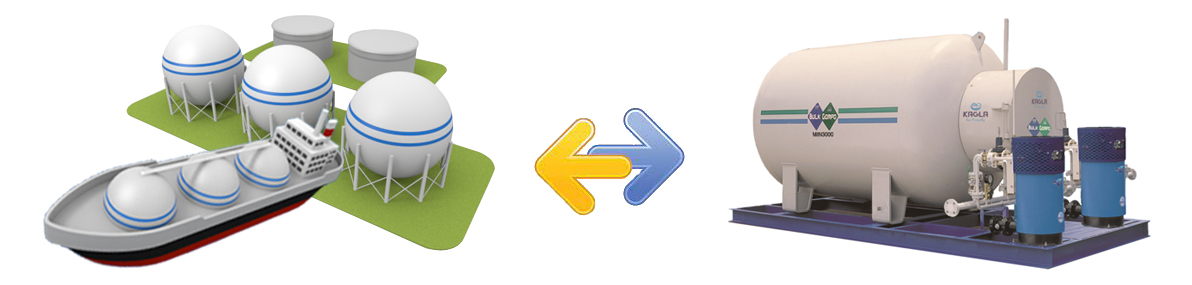
Advantages and disadvantages of LPG and NG
LPG
NG (natural gas):
- No piping required, everything can be installed locally.
- Can be used as an additional energy source.
- Higher price.
- Need space for installation.
- More complex installation.
- Lower price.
- Easy to install and operate.
- No need for a large space for installation.
- Additional piping and equipment required.